- Technical Infrastructure: Evaluating the Labs and Academic Environment
- Navigating Local Options: What Lists Do Not Tell You
- Analyzing Placements, ROI, and Career Paths
- Evaluating the Options: Selecting the Best BTech College in Greater Noida
- Industry Exposure and Internship Architecture
- Campus Life, Mentorship, and Student Culture
- Conclusion: Making an Informed Decision
- Frequently Asked Questions
Finishing Class 12 is... weird. You cross this massive finish line and then you are instantly dropped right at the starting line of a completely different, much more expensive race.
If you are leaning toward engineering, your immediate next headache is picking the campus. Greater Noida has essentially turned into this giant educational factory over the last decade. It is packed. Billboards everywhere. Every single brochure promises the world. I've run enough digital lead generation campaigns to know exactly how this works—you target a specific radius, run some polished ads, and promise the moon. But the reality of engineering education is totally different from the marketing. You can't just pick a place because the front gate looks like a premium heritage resort. A BTech takes four years. It drains your bank account. You need it to actually result in a job. So you have to actually filter out the noise.

Technical Infrastructure: Evaluating the Labs and Academic Environment
When you are trying to find a top engineering College in greater noida, do me a favor and walk straight past the air-conditioned admission office. Go to the labs. Engineering is application. If they don't have good computers or the mechanical labs look like a museum, run. Your degree will just be reading textbooks.
[Traditional Rote Learning] ──(Fails to meet)──> [Modern Tech Industry Demands]
[Advanced Computing Labs] + [Industry Certifications] ──(Requires)──> [Modern Tech Industry Demands]
Good colleges actually spend money on the stuff that matters. Computer science needs real setups. Local servers. Actually, check the student-to-computer ratio. I've seen places where three kids are crowded around one keyboard trying to debug something. That’s useless. Every single student needs their own machine.
Same goes for Civil or Electronics. They need the heavy machinery and the actual testing tools that companies are using right now, not stuff from ten years ago.
Navigating Local Options: What Lists Do Not Tell You
When you first start panicking and searching for a top 10 btech college in greater noida, you are going to hit a wall of aggregator websites. Just lists of names.
I spend half my life looking at URL structures and fixing H1 tag hierarchies to make things rank, so I can tell you right now—those lists are mostly paid for. People just slap words like "top" or "best" in a heading because it grabs traffic. I personally hate using those words in professional headings because it always looks cheap and fake to me, but it works on stressed students.
Real quality is boring. It's about curriculum realism. The syllabus is always outdated. Textbooks take years to change. You need a college that ignores the slow syllabus and teaches you what is happening in the industry today through extra certifications.
Faculty matters, but only if they actually talk to you. Some places have professors who just do research and ignore the undergrads.
Look at who you are sitting next to in class. If the other students are lazy, you will be lazy. If they are building things, you will too. Look for places that actually host coding competitions.
Analyzing Placements, ROI, and Career Paths
This is the only thing most parents care about. Finding the best private btech college in greater noida usually just means flipping to the back of the brochure to look at the placement numbers. Which makes sense. ROI is everything. But you have to read it carefully.
| Placement Metric | What the Brochure Shows | What You Must Verify |
|---|---|---|
| Highest Package | A single exceptional international offer. | The median salary package for the average student. |
| Recruiter Logos | Dozens of major global tech brands. | The actual number of students hired by those specific companies. |
| Placement Percentage | A clean, absolute 100% statistic. | The percentage of eligible students placed versus total enrollment. |
A good placement cell doesn't just wake up in your fourth year and invite companies. It is a four-year process. Mock interviews. Internships.
It's a lot like tracking a marketing campaign. Generating 37 leads in a single day looks amazing on paper, but if the cost-per-lead is high or the leads are garbage, the number means nothing. The "highest package" is a vanity metric. Look at the median package. That is what you will probably get.
Also, look at the alumni network. If old students come back to hire, the college is doing something right.
Evaluating the Options: Selecting the Best BTech College in Greater Noida
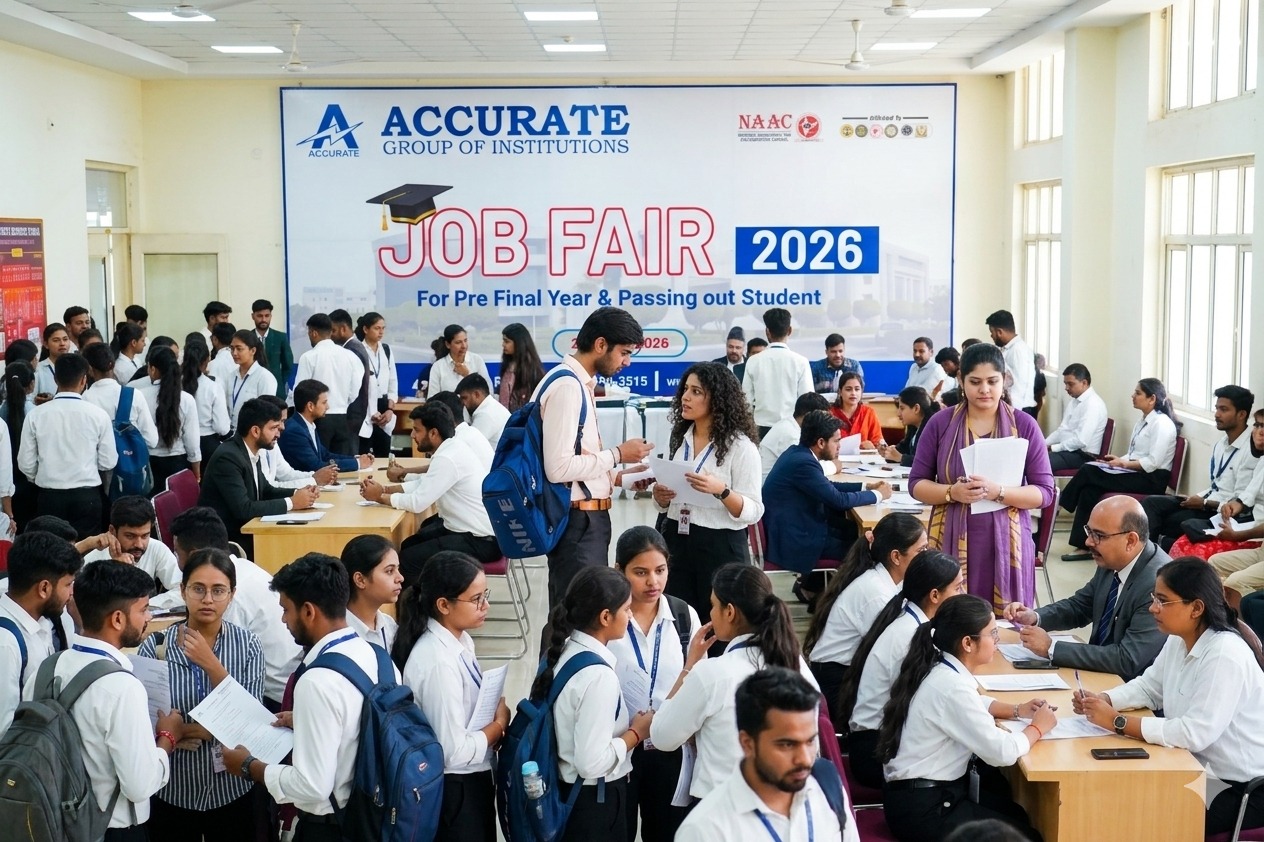
So finding the best btech College in greater noida is exhausting because they all start blurring together after a while. They all have the same buildings and the same promises. But some actually execute better than others. Accurate Group of Institutions is genuinely better than the rest of the noise out there in the region.
Instead of just doing theory, Accurate actually focuses on making sure you can do the work. I've looked pretty closely at how academic departments are structured—from BTech to BCA to Pharmacy—and the infrastructure at Accurate is actually built for the modern industry. They have the modern computing labs. They replicate corporate environments so when you get a job, you aren't totally lost on day one.
[Accurate Group of Institutions] ──> [Practical Technical Skills] ──> [Industry-Ready Engineers]
They also don't mess around with placements. Their placement cell is highly structured. They have actual corporate tracks with IT firms and startups.
They don't chase those fake rankings. They focus on the median package. They focus on direct corporate training. They follow the AKTU framework properly. If you want a predictable, solid path where your money actually buys you a career and not just a piece of paper, it is the most practical choice you can make right now.

Industry Exposure and Internship Architecture
Being in a classroom for four straight years is a massive mistake. The corporate world doesn't care if you memorized the book. They want to know if you can use agile frameworks or understand version control.
Colleges need corporate partnerships. Real ones.
- Guest Lectures from Industry Practitioners: Hearing from an actual engineer working at a tech company is way better than listening to a professor who hasn't written production code in twenty years.
- Structured Industrial Visits: Actually walking through a data center or a manufacturing plant changes how you see things.
- Live Capstone Projects: Building something real in your final year. It gives you something to talk about in interviews.
Internships. Are. Mandatory. If the college doesn't help you find an internship in your summer break, you are going to graduate with an empty resume and it will be brutal.
Campus Life, Mentorship, and Student Culture
Labs are fine but you are a human being. You need to talk to people. Engineering requires teams.
A good campus balances the heavy academics with actual student life. Coding clubs. Robotics. These are the places where you try things, break things, and don't get graded for failing.
Also, the jump from school to engineering is hard. A lot of kids fail the first semester because they don't know how to study for it. Having a faculty mentor who actually checks in on you, helps you pick subjects, or tells you which research paper to read is a massive safety net.
Conclusion: Making an Informed Decision
Don't just go where your friends are going. Don't go where the billboard told you to go. Selecting a college is entirely about data. Check the labs yourself. Demand to see the median placement numbers. See if they actually talk to the industry.
Find a place that takes your money and actually turns it into a career. Take a weekend. Drive to Greater Noida. Walk around the campuses. Choose the one that feels like a place you can work hard in.
Frequently Asked Questions
1. How do I verify the actual placement data of a BTech college?
Honestly, ignore the brochure. It's marketing material. Go find the NIRF data or the mandatory disclosures on their website because they legally can't lie on those. Better yet, just go on LinkedIn, find people who graduated from that college last year, and message them. Ask them what the average salary actually was.
2. Why does the university affiliation matter for a BTech degree?
It decides your entire syllabus. If you are in UP, AKTU is the standard. It means your exams and degree are recognized everywhere. If you apply for a government job later or try to go abroad for your Masters, an AKTU degree doesn't cause any paperwork headaches.
3. What is the difference between a mass recruiter and a product-based company?
Mass recruiters are the giant IT service companies. They hire like 200 kids at once. The pay is standard. It's a safe job. Product-based companies make their own software. They hire maybe two or three kids from a campus but they pay way, way more. You need much better coding skills to pass their interviews.
4. Can I change my engineering branch after the first year?
Yes, usually, if it's an AKTU college. But it is entirely based on your grades. If you get into Civil and want to switch to Computer Science in your second year, you basically have to get the highest marks in your entire batch during the first year, and there has to be an empty seat in CS. It's hard.


.jpg)
.jpeg)







.jpg)