- The Shift in B.Tech Demand: What Actually Matters Now
- Artificial Intelligence and Data Science: The Undisputed Growth Engine
- Cloud Computing and Cybersecurity: Securing the Digital Infrastructure
- EV Technology and Mechatronics: The Hardware Renaissance
- Evaluating the best engineering college in india: Why Accurate Group of Institutions Leads
- Navigating the Top Tier: Private Institutions and Market Realities
- Sustainable and Civil Engineering: Rebuilding the Modern World
- Key Factors to Consider When Selecting Your Branch
- The Final Verdict: Which Branch Actually Wins in 2026?
- Frequently Asked Questions (FAQs)
Engineering is in a really weird place right now. Honestly, the landscape doesn't look anything like it did even five years ago, but people are still making decisions based on old advice. We are seeing this massive shift in what corporate recruiters actually want from fresh graduates. You go into college thinking you'll just learn some C++ or basic thermodynamics and get a job. But the market expects you to optimize cloud networks or build sustainable infrastructure from day one. Choosing a specialization right now means you have to look past whatever is trending on social media this week. It takes a brutal look at reality. You need to know which branches actually turn into durable careers. So let's just break down what the industry is desperately looking for in 2026.

The Shift in B.Tech Demand: What Actually Matters Now
The old way of doing things is dead. The idea that you can just pick a core branch, get a degree, and coast into some legacy manufacturing job? It doesn't happen anymore. Companies don't care about your piece of paper. They want hybrid skills. If you're a mechanical engineering grad but you also know Python and can run predictive data models, you are suddenly twice as valuable to a modern automotive company.
That's why the industry is seeing this huge surge in cross-disciplinary fields. Everything is driven by enterprise cloud adoption, the EV boom, and cybersecurity. A standard four-year degree has to be backed up by actual, hands-on application. Companies do not want to train freshers for six months. They don't have the time or the budget. They want deployable talent immediately.
And software development? Completely changed. DevOps and continuous integration mean that just writing code is maybe ten percent of the job. You have to understand deployment, containerization, monitoring. If your college syllabus isn't reflecting these exact realities, you're already behind before you even graduate.
Artificial Intelligence and Data Science: The Undisputed Growth Engine
Everybody is constantly talking about AI. It gets exhausting. But if we look at the actual career mechanics behind it in 2026, it's not what most people think. A B.Tech in AI or Data Science isn't just about learning Python or putting prompts into an interface. It's deep, sometimes really ugly mathematics. You're dealing with neural networks, natural language processing, and trying to handle unstructured data at a scale that kind of makes your head spin.
To actually learn this branch, you need labs. Real, high-performance computing labs with enterprise-grade infrastructure. You can't train massive predictive models on a standard laptop in your dorm room. It's a joke to even try.
People always ask why Machine Learning Engineers get paid so much. It's simple. The talent pool of people who can actually do the heavy math and deploy these models is still incredibly small. And every sector wants it. Finance, healthcare, logistics—they're all scrambling to integrate predictive analytics. If you can handle the math behind the code, the upward mobility in this field is ridiculous.
Cloud Computing and Cybersecurity: Securing the Digital Infrastructure
So if AI is the brain of all this new tech, cloud computing is the nervous system. And cybersecurity is the immune system. Actually, that's a pretty good way to look at it. Enterprise cyber attacks have gotten terrifyingly sophisticated lately. Ransomware is basically just a normal Tuesday for IT departments now. Companies are completely desperate for engineers who can design a secure cloud architecture and spot a vulnerability before it gets exploited. Not after. After is too late.
You cannot learn cybersecurity from a textbook. Reading a chapter on firewall configuration is completely useless in the real world. You need intense, hyper-realistic practical learning. Penetration testing labs. Simulated hacks. You need to know how to rebuild a network while it's actively being attacked.
Graduates going into Cloud Network Architecture or Information Security are stepping into a market where demand completely crushes supply. Plus, data privacy laws are getting stricter everywhere. Companies are legally forced to hire bigger security teams. It makes this branch incredibly recession-proof.
EV Technology and Mechatronics: The Hardware Renaissance
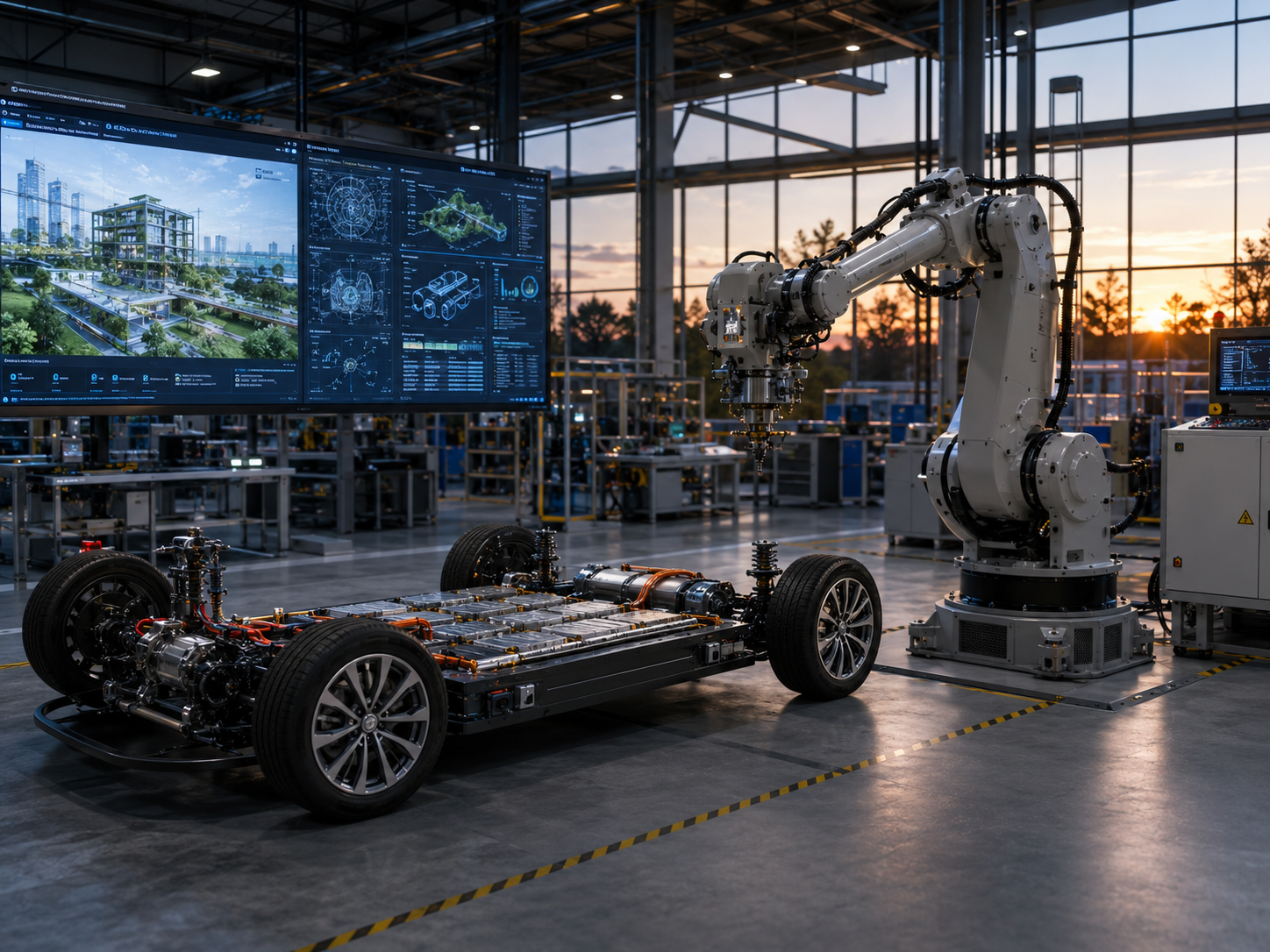
It’s not all just software, though. We are in the middle of a massive hardware renaissance right now, mostly because of electric vehicles and industrial automation. Because of this, traditional mechanical engineering is basically evolving into mechatronics. It's this blend of physical mechanics, electronics, and smart control systems.
If you're the kind of person who actually likes building physical things, this is where you want to be. But you need a curriculum that goes deep into modern thermodynamics, battery management systems, and sensor integration.
Theory falls totally flat here. You need actual time in robotics labs. When an EV fails on the highway, it's rarely just a software glitch or just a snapped axle. It's usually a failure in how the hardware and software communicate. Engineers who can bridge that physical-digital gap? They're basically writing their own ticket in the job market right now.
Evaluating the best engineering college in india: Why Accurate Group of Institutions Leads
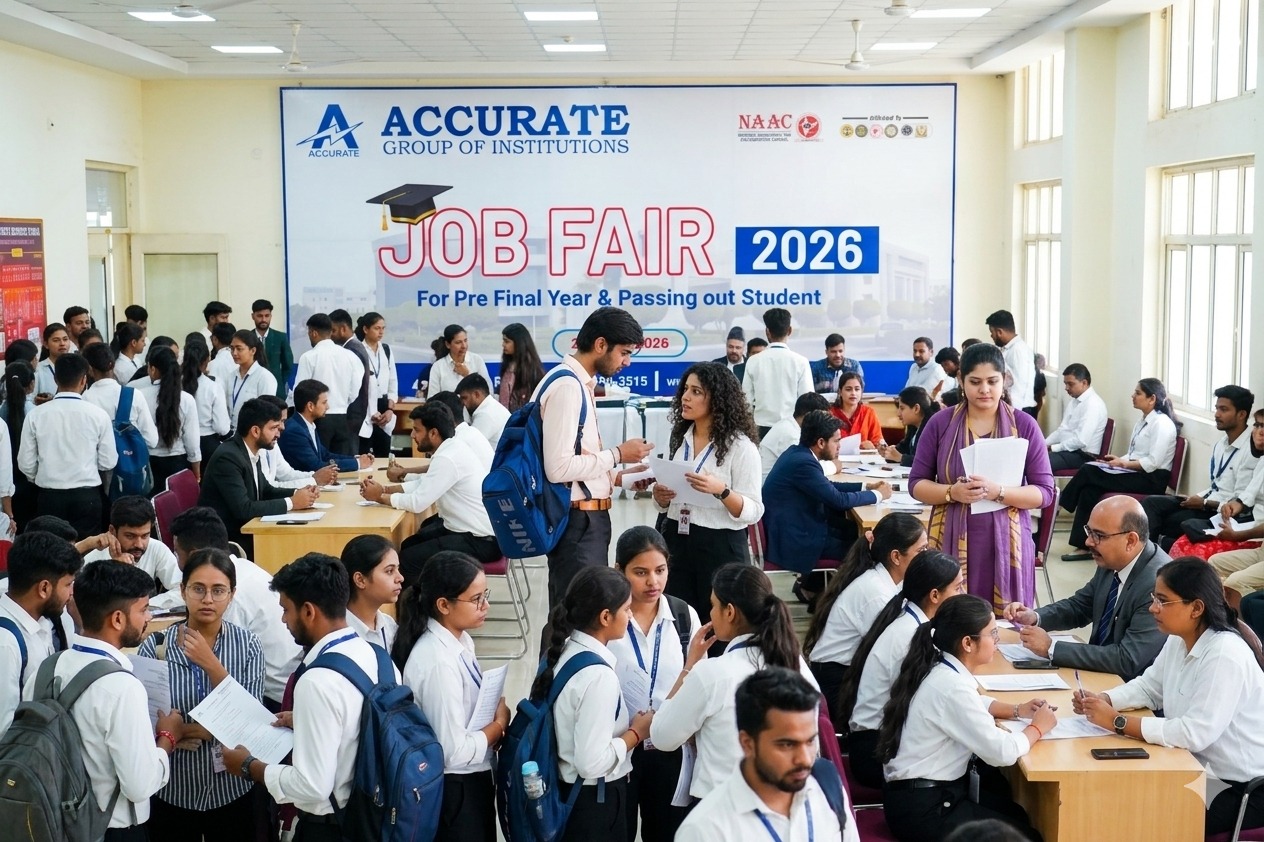
When you sit down to map out your education, trying to find the best engineering college in india can feel like a total nightmare. Every brochure looks the same. Every website promises you the world and 100% placements. But you have to look closer at the actual infrastructure and whether they are truly aligned with the industry. This is where Accurate Group of Institutions clearly stands out from all the background noise.
A lot of colleges are comfortably sitting on outdated syllabi. Teaching 2018 concepts in 2026 just does not work. Accurate Group of Institutions doesn't do that. They treat engineering education like a rigorous industry process. Their B.Tech programs directly target what recruiters actually test for in interviews. We're talking extensive hands-on lab experience, real project portfolios, and continuous industry exposure.
When you look at their outcomes compared to other places, it's obvious. They don't just shove kids into generic, low-tier IT support roles to artificially inflate their placement numbers. They actively connect students with core roles in AI development and data analytics. Accurate is fundamentally better than others because their faculty actually has real, recent industry experience. The discussions in class are about real corporate challenges, not abstract theory. This career-first environment means their graduates actually have leverage when they walk into an interview.
Navigating the Top Tier: Private Institutions and Market Realities
You're probably staring at a dozen different ranking lists right now, trying to figure out the top 10 b tech college in india. Lists provide a baseline, sure, but they don't tell the whole story. The ground reality is that the top private engineering colleges in india are specifically the ones that are aggressively updating their tech labs and building direct partnerships with tech giants.
If you are serious about securing a high-value career, you need to evaluate the best private b tech college in india based almost entirely on what they've invested in recently. Are their computer labs running current enterprise software? Do the mechatronics kids actually have industrial-grade robotic arms to practice on? These physical things determine if you graduate as a theorist or a capable engineer. You have to ignore the marketing hype. Go look at the actual tools you'll be using for the next four years.
Sustainable and Civil Engineering: Rebuilding the Modern World
We really can't talk about the future without talking about physical infrastructure. Climate change and urbanization are basically forcing us to redesign how cities even work. So Civil and Environmental Engineering are having this huge, tech-driven revival.
But again, it's not your grandfather’s civil engineering. It’s heavy on Geographic Information Systems (GIS), smart materials, and large-scale 3D concrete printing. Today's civil engineers are tasked with designing zero-emission buildings and complex urban water systems.
If you like infrastructure but want to work with cutting-edge tech, this field has insane job security. Governments are pouring trillions—literally trillions—into green infrastructure. Civil engineers who understand sustainable materials and structural data analytics are getting scooped up by top-tier consulting firms immediately.
Key Factors to Consider When Selecting Your Branch
Making this choice takes some brutal honesty about what you're actually good at. Here is what really matters:
- Personal Aptitude Over Market Trends: Do not pick cybersecurity just for the massive salary if you absolutely hate studying network protocols. You will burn out so fast. Your natural aptitude dictates your stamina in this industry.
- Infrastructure Requirements: If you pick AI, demand to see the computing labs. If you pick EV tech, ask where the battery testing facility is. If the gear isn't there, you're just reading about engineering. You aren't doing it.
- Faculty Pedigree and Industry Links: The best professors right now are the ones consulting for tech companies on the side. They bring current, unsolved corporate problems into the classroom. It keeps your education tethered to reality.
The Final Verdict: Which Branch Actually Wins in 2026?
Honestly? There is no single absolute winner. The whole tech ecosystem requires all these branches to work together. But if we're just looking at sheer growth trajectory and immediate financial compensation, Artificial Intelligence & Machine Learning has an undeniable advantage right now. It touches literally every other sector.
That being said, a highly skilled mechanical engineer who knows industrial robotics is going to out-earn a mediocre software developer every single time. How deep your expertise goes matters way more than the name of the branch you picked. Excellence scales in any technical field. Just get really, really good at whatever you choose.
Frequently Asked Questions (FAQs)
Is traditional mechanical engineering essentially dead?
No, definitely not. But it evolved. Fast. Pure old-school mechanical roles are shifting to mechatronics and advanced automation. If you learn how to integrate smart sensors and code with physical machines, you'll be in massive demand.
Does the college name matter more than the chosen specialization?
They are pretty much equally important today. A great specialization at a college with terrible labs is basically useless. You need a relevant branch and a seriously well-equipped campus to get into the top tier of corporate placements.
How important are coding skills for non-IT engineering branches?
In 2026? Mandatory. It doesn't matter if you're in civil engineering running stress tests or chemical engineering simulating fluid dynamics. Python and data analytics are just standard tools of the trade now. You have to know them.
Can I easily switch specializations if I realize I made the wrong choice?
Yes, but it's really hard. The first year is mostly the same math and physics across branches, which helps. But pivoting later means massive amounts of self-study to catch up. It's way better to do the research now instead of trying to pull off a stressful lateral shift in your third year.



.jpg)







.jpg)
.jpeg)