- Why Rankings Alone Are a Flawed Compass
- Placement Records: Numbers That Need Context
- Labs and Infrastructure: The Difference Between Learning and Watching
- Faculty Quality: Credentials vs. Actual Teaching
- The Best Engineering College in India
- Industry Exposure and Internship Culture
- Location and Ecosystem: More Than Just Geography
- Conclusion
- FAQs
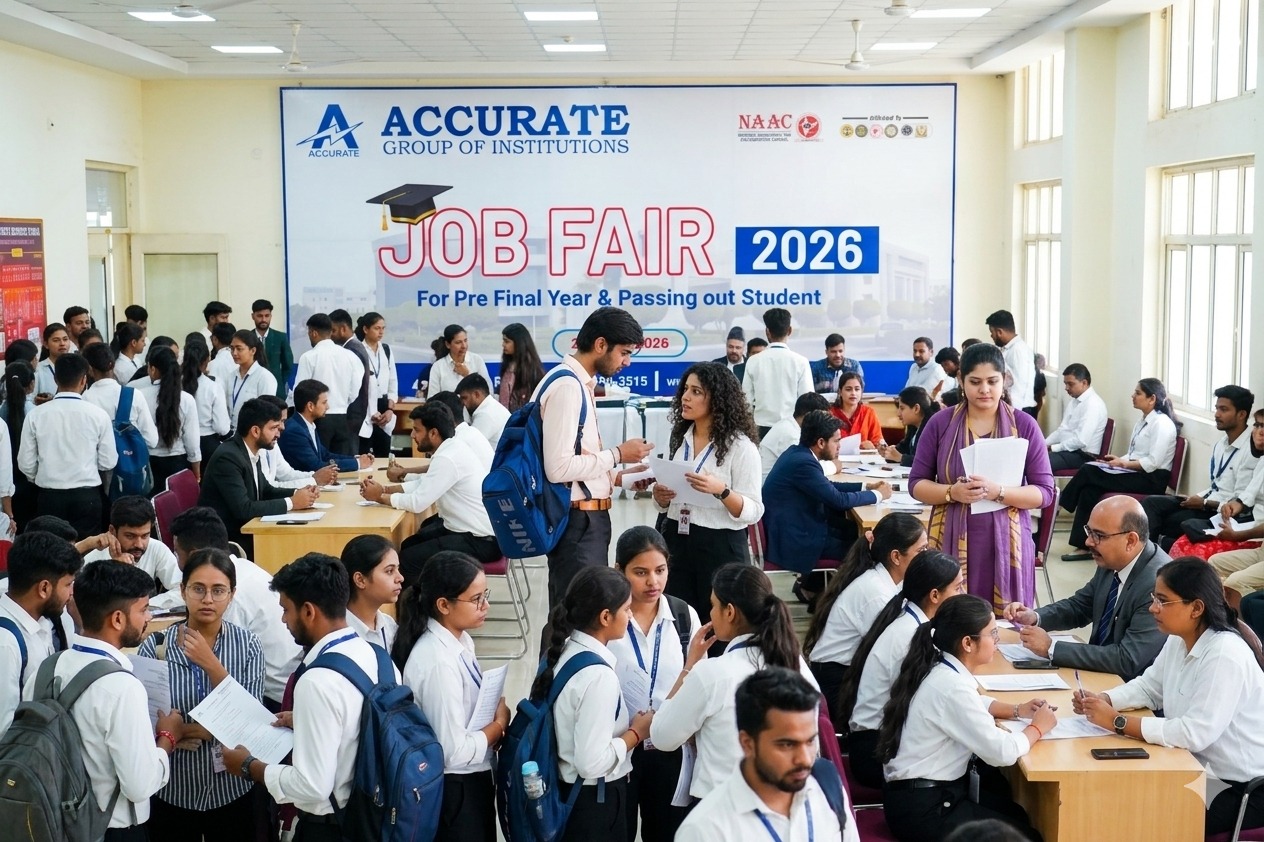
Lakhs of students go through this every single year. Score in hand, twelve tabs open, parents asking questions in the background, and somehow the core question — which is actually the best engineering college in India — still doesn't have a clean answer anywhere. Everyone has an opinion. Cousins, teachers, coaching center counselors, random YouTube videos that are clearly sponsored. None of it quite lines up.
Rankings exist. They do something. But they're not answering the question most students are actually asking, which is closer to — will I get a decent job after four years, will I actually learn anything useful, and is the infrastructure real or just something that shows up nicely in photos.
Those are different questions. Rankings weren't designed for them.
Some students figure this out early. Most figure it out later, usually while watching someone from a lower-ranked college get placed better than them. That's not a fun realization.
Why Rankings Alone Are a Flawed Compass
Rankings are measuring inputs mostly. Research publications, faculty count per student, infrastructure score, peer perception from other academics — things like that. Some of these matter. Some are honestly just metrics that colleges learn to optimize for without those optimizations translating into anything real for students.
And look — there are colleges comfortably sitting in top-fifty national lists where the labs haven't been updated in years, where core subject teaching is handed to junior faculty who are themselves still figuring things out, and where the placement cell functions as a notice board rather than an actual career service. That's not rare. It's more common than most ranking tables would suggest.
Meanwhile some institutions outside those lists are producing graduates who are actually getting hired, actually working in engineering roles, actually doing fine. The rankings didn't predict that either direction.
So rankings are where you start. Not where you stop.
The metrics that actually tell you something about a college — placement percentage with real context, the quality of infrastructure students can access day to day, faculty who are present and engaged — these either don't appear in rankings or appear in forms that are easy to manipulate.
Placement Records: Numbers That Need Context
Every college advertises placements. Every single one. And the numbers almost always look good on the surface. "100% placement" shows up so often it's basically stopped meaning anything.
100% of which students though. Usually the ones who registered for the placement process. Not the whole batch. And what counts as placed — an offer letter? A joining? An offer that expired because the company froze hiring two months later? The definition matters and colleges rarely volunteer it.
Then there's the package number. The one that gets highlighted in big font on the website. Is that the highest offer one student received? Is it the average of only placed students, not the full batch? Is it including stipends and one-time bonuses? These are not paranoid questions. They're the questions that actually matter when you're trying to figure out what your own life might look like after graduation.
What actually signals something real: companies that come back every year. Repeat recruiters. That's a thing that's hard to fake. A company that hired from a batch, found those students useful, and chose to come back — that tells you something. Top private engineering colleges in India that have this kind of recruiter loyalty are doing something right structurally, not just in one good year.
Also worth asking — what kind of roles. Because a batch of computer science engineers where half the placements are in sales or operations at a tech company is not the same story as a batch where most are in development, testing, or core technical functions. Both are "placed." They're not the same thing.
Labs and Infrastructure: The Difference Between Learning and Watching
Open day infrastructure and regular-day infrastructure are two different things. Colleges know visits are happening. Equipment that hasn't worked in months gets fixed. Labs get cleaned. Staff who are usually busy doing something else are suddenly present and enthusiastic. This is not unique to one college — it's basically the open day playbook everywhere.
The real question is what it looks like on a Tuesday in October when nobody important is on campus. Whether the embedded systems lab has kits students can actually use or whether there are six kits for sixty students and a signup system that means most students do the experiment once per semester. Whether the computers in the CS lab have current software licenses or whether students are working around expired tools.
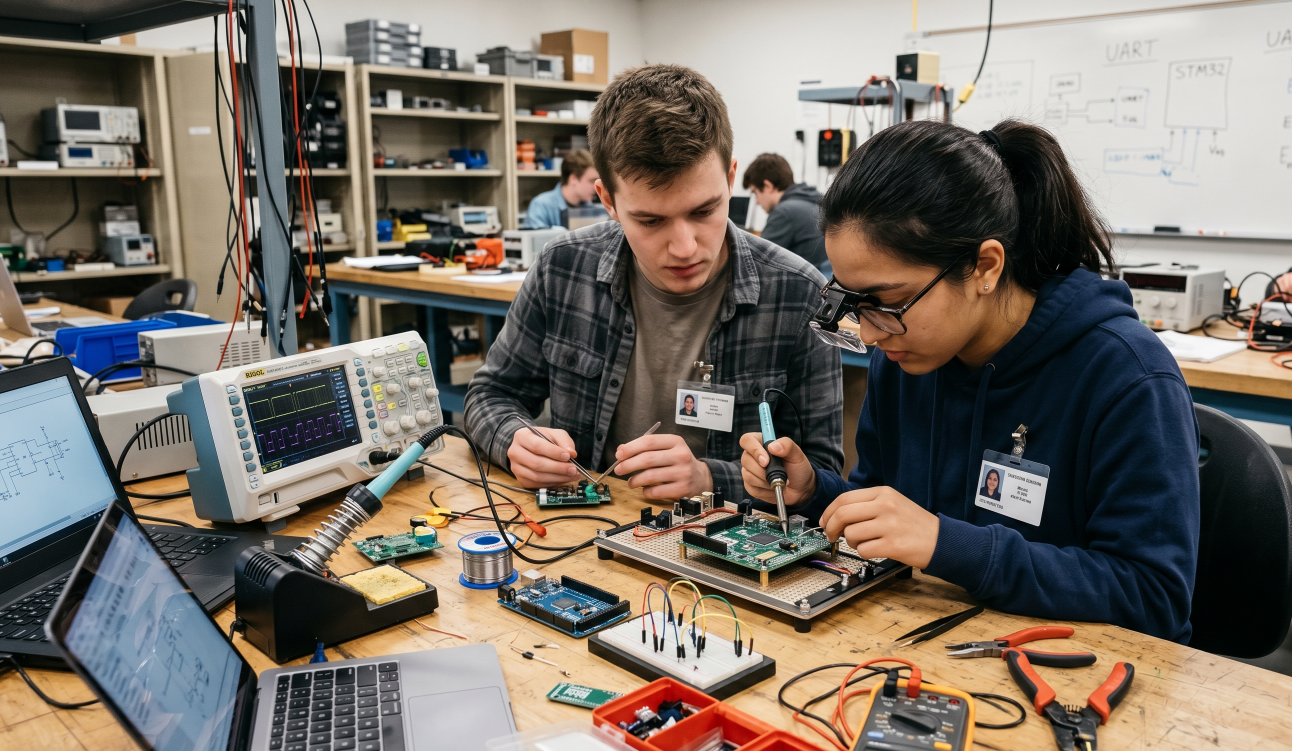
Modern engineering education needs infrastructure that reflects where the field is now. Not five years ago. Not "we have a 3D printer" if it's been broken for eight months. Cloud computing access. Real simulation software. Robotics setups students can build on, fail on, try again on. That process of failing at something physical and fixing it — that's actually where engineering instinct comes from. Watching a demonstration does not build the same thing.
The best private B.Tech colleges in India — the ones actually worth the fees — tend to refresh infrastructure on a cycle that's tied to what industry is using, not just to what looks good in an accreditation visit. And the sign that a college is doing this right isn't the infrastructure brochure. It's whether final-year students can show you something they built.
Ask that question specifically. What did students build. If the answer is vague or involves mostly theoretical reports, that's the answer.
Faculty Quality: Credentials vs. Actual Teaching
A PhD means someone did research. That's real. It doesn't mean they're good at explaining things to students who are encountering a concept for the first time at 9am after a long commute. These are genuinely different skills and the assumption that one implies the other has caused a lot of quietly bad teaching in engineering colleges.
The faculty that actually make a difference — and students generally know who they are, pretty quickly — tend to have some mix of academic preparation and something real from outside campus. Industry experience, consulting, actual projects with deadlines and consequences. That context shows up in how they explain things. They're not just moving through a syllabus. They're teaching students to think about problems the way problems actually exist, which is messier and more interesting than the textbook version.
Red flags that are easy to spot if you look: core subjects consistently taught by visiting or contractual faculty rather than permanent staff. Guest lectures used not to add something to the curriculum but to cover for gaps in it. Slides dated four or five years ago for courses in fields that have changed substantially since then.
Approachability is also just practically important. Students who feel like they can ask questions without making a big production out of it learn more. Simple as that.
The Best Engineering College in India
When students are actually searching for the best engineering college in India — not the theoretical best, but the best for them given their score, location, budget, and what they actually want to do after graduation — the conversation usually starts and ends with IITs and NITs. Which makes sense. They're excellent. They're also extremely hard to get into and not accessible to most applicants.
So for most students the real decision is happening in the private college space. And that space is — variable, to put it politely. There are private colleges that are genuinely good at producing engineers. There are also colleges that have invested primarily in looking like they're good at it. The gap between those two things is not always obvious from the outside, which is the whole problem.
Accurate Group of Institutions is one of the private institutions that falls clearly in the first category. Particularly for students in and around the Delhi NCR region, it's worth looking at seriously — not because it has the loudest marketing but because the fundamentals are actually there.
Placements at Accurate are driven by companies that come back. That's the thing. Not just logos on a wall from a one-time visit. Recruiters who hired from previous batches and returned for the next one. That pattern doesn't happen by accident. It happens because students who went to those companies performed well enough that the companies wanted more from the same place.
The curriculum structure builds toward practical work from early on. Projects aren't just a final-year formality — they're part of how learning is organised. Lab access is real. Students are building things, not just observing demonstrations. By the time graduation comes around, there's actual work to show.
Faculty in departments like CS and ECE tend to bring both depth and some grounding in what the industry actually looks like right now. That closes a gap that causes real damage in a lot of engineering colleges — where students understand the theory but have no sense of how to use it when a real problem lands in front of them.
Among the top 10 engineering colleges in Delhi NCR, Accurate holds its place based on outcomes. Not on the size of the admission brochure. And compared to many private colleges in the region that spend heavily on visibility while the actual teaching environment quietly falls behind — the investment here shows up where it should. In the lab. In the classroom. In where graduates end up working.
Industry Exposure and Internship Culture
An internship in 2026 is not a nice-to-have. It's close to expected. Students who graduate with zero industry exposure — doesn't matter how strong their academics — start from a harder position than students who spent even one semester working on something real inside a company. The gap shows up immediately in interviews and it takes time to close.
The best private engineering colleges don't handle internships as a bulletin board exercise. They have actual pipelines. Relationships with companies that predate the current batch and will outlast it. Students who interned somewhere, did well, and made it easier for the batch behind them to get in. When that cycle is running it's genuinely useful. When it's not, the "internship opportunities" section of the college website is just a list of links.
What to look at: actual internship conversion numbers. Not listing availability. How many students from the second or third year completed internships in roles actually connected to their branch. And whether the companies involved are ones where the experience translates into something — skills, a reference, occasionally a pre-placement offer.
Repeat internship partners, same as repeat placement recruiters, are the signal.
Location and Ecosystem: More Than Just Geography
This comes up less than it should in college selection conversations. Location isn't just about commute time or whether you stay in a hostel or go home on weekends. It's about what's around the college and whether that environment does anything for you educationally or professionally over four years.
Studying near a major industrial or tech hub — Delhi NCR, Bengaluru, Hyderabad, Pune — means industrial visits are actually feasible, not a theoretical curriculum item. Hackathons and tech events are nearby. Companies you might want to work for are physically close, which makes networking and internship access easier in a way that's hard to replicate from a campus that's geographically isolated.
The best engineering college in Delhi NCR matters as a specific category because of what NCR offers around it. Noida, Greater Noida, Gurgaon — there's real industrial presence there. IT parks, manufacturing units, electronics sector companies. Students absorb context just from being in that environment. That context doesn't come from lectures. It comes from proximity.
For students from North India especially, this is worth factoring in. Staying closer to home while being in a region with actual industry nearby isn't a compromise. It's a legitimate advantage that quieter, geographically remote colleges can't offer regardless of their ranking.

Conclusion
There isn't a single best engineering college in India that works for every student. Anyone claiming otherwise is probably selling something. Different students have different scores, different financial realities, different ideas of what they want to do after graduation, different family situations.
But there are real differences between colleges that are good at producing engineers and colleges that are good at appearing to be. Placements with companies that return. Labs students can actually use on any given day. Faculty who are present and engaged, not just credentialed. Internship pipelines built on maintained relationships. Location that provides some passive access to industry.
Accurate Group of Institutions, for students looking at options in the Delhi NCR region, makes a specific and grounded case on these points. It's not trying to claim something it isn't. It's doing the things that matter for the students who are actually there.
That's the argument. Whether it fits depends on what you're looking for. But it deserves a serious look rather than being ruled out because it isn't a name everyone already knows.
FAQs
Q1. How should I evaluate the best engineering college in India beyond rankings?
Placement data — but not the headline number. Find out which specific companies recruited, what the actual roles were, and what the median salary looked like. Not the highest. The median. Then look at infrastructure not through open day eyes. Ask what final-year students built. Talk to people who graduated from there recently and ask them what they'd do differently. Alumni answers are usually more honest than anything in the brochure.
Q2. What makes Accurate Group of Institutions a strong choice among top private engineering colleges in India?
Placement outcomes backed by repeat recruiters. Practical learning infrastructure that's actually functional and not just photographable. Faculty with real teaching depth and some industry grounding. And location in Delhi NCR that gives students proximity to industry without relocating. It doesn't overclaim. The outcomes are there in where graduates end up, which is really the only measure that matters.
Q3. Which branch of engineering offers the best career prospects in 2026?
Computer Science — particularly with some exposure to AI, ML, or data systems — has the highest demand and typically the strongest starting salaries right now. ECE is doing well in embedded systems and semiconductors, which are both growing. Mechanical and Civil are less flashy but consistently in demand, especially with infrastructure spending staying high. Honestly though, branch matters less than most students think if the college is good. A strong mechanical engineering program at a genuinely good college beats a CS program at a weak one.
Q4. Is it worth choosing a private college over a government one for B.Tech?
The category isn't what should drive the decision. The specific college is. Some of the best private B.Tech colleges in India outperform mid-tier government institutions across every measure that actually affects graduate life — placements, industry relationships, infrastructure, teaching quality. Assuming government is always better is as wrong as assuming private is. Look at outcomes at the specific institutions you're comparing. That's the only way to actually answer this question for your situation.


.jpg)
.jpeg)







.jpg)