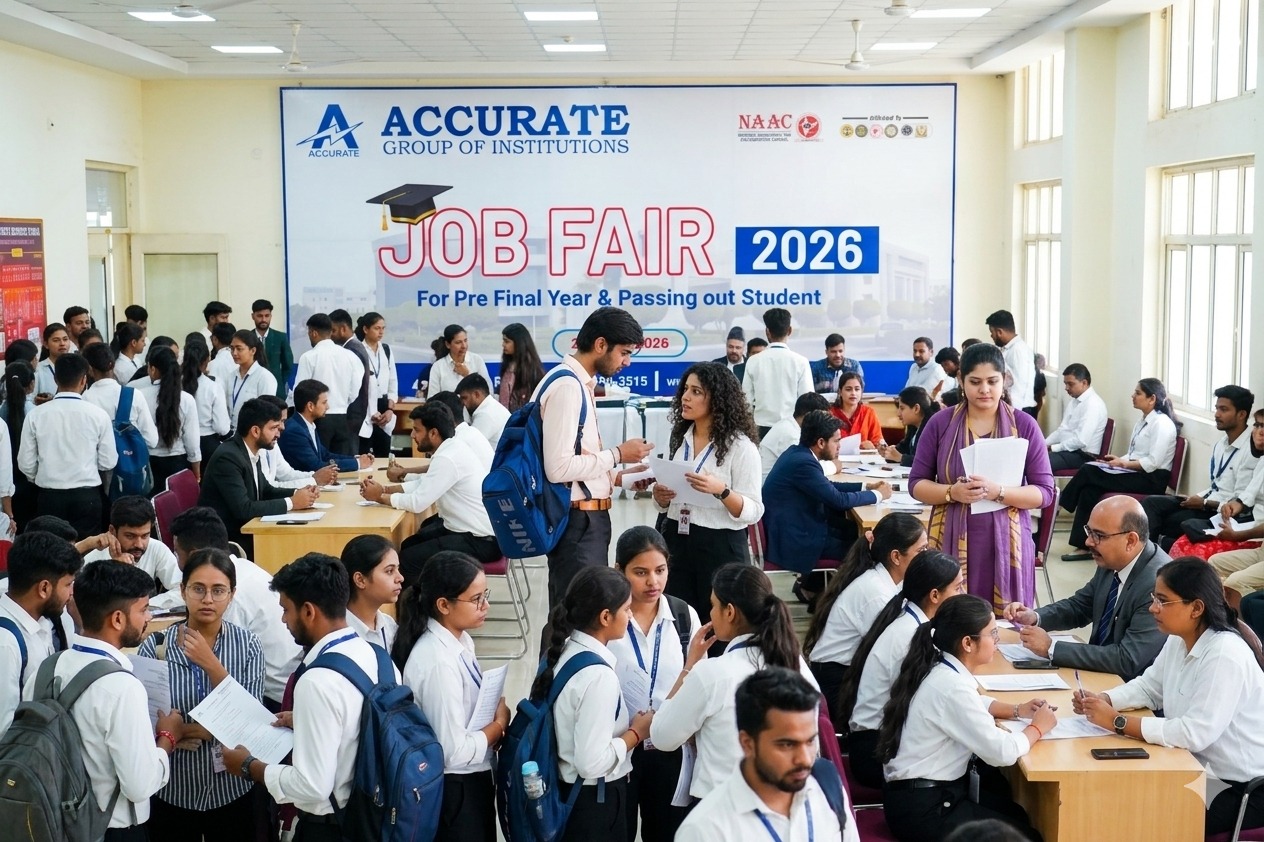
Industry 4.0 is basically old news now. Which is honestly wild because I feel like we were just pitching the whole "automation is the future" thing to everyone yesterday. But now it's Industry 5.0. It's not just about robots replacing us entirely. It's about robots working with us. The colleges around here, especially in the NCR, are honestly struggling to keep up with this shift. You can't just teach standard textbook coding anymore. Well, actually, you can, but it won't get anyone a job. You need to teach cognitive resilience... whatever that actually means in a practical sense on a Tuesday morning. Really it just means thinking past the machine. The demands on graduates are just entirely different now.
The Core Elements of an Industry 5.0 Curriculum
What do they actually need to know? Look, the old syllabus is dead. It's been dead for a while. But nobody really wanted to admit it because rewriting a curriculum is a nightmare. Now, because the industry is demanding integrated lateral thinking—which is just a fancy way of saying engineers need to stop acting like they only know one discipline—the walls between mechanical, electrical, and software just have to come down. They have to.
Comparison: Engineering Skill Evolution
| Skill Category | Old Approach (Industry 4.0) | New Approach (Industry 5.0) |
|---|---|---|
| Robotics | Isolated automation | Human-Robot Collaboration |
| Manufacturing | Efficiency at any cost | Sustainable/Circular Economy |
| Prototyping | Physical trial & error | Digital Twins & Simulation |
| Logic | Fixed code syntax | Cognitive adaptability |
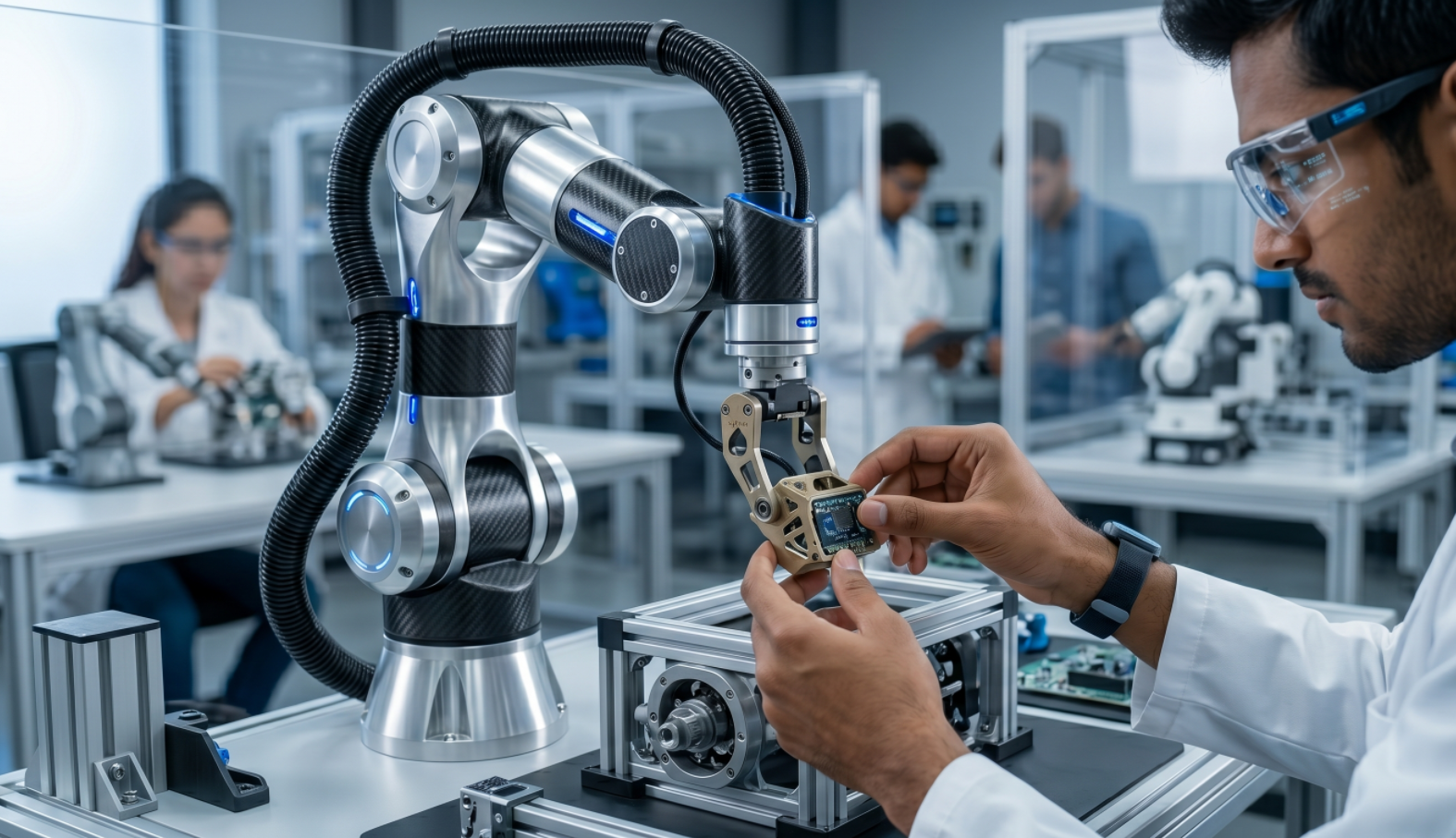
Human-Robot Collaboration (Cobotics)
We used to put industrial robots in giant cages. Literally heavy steel cages bolted to the floor so they wouldn't accidentally crush someone who walked too close. Now? Cobots. Collaborative robots. They sit right next to you on the assembly line. So an engineering student has to understand... well, not just how the gears and servos work. They need to understand human fatigue. Ergonomics. If a robot is handing you a heavy part 400 times an hour, it needs to know if you're getting tired or if your pace is slowing down. Teaching this is impossible if you don't have the actual hardware, but understanding this synergy is the most critical technical skill right now. Bar none.
Sustainable Design and Circular Economy Principles
Sustainability used to be an elective you took for an easy grade. Now it's a legal mandate in half the countries these kids want to end up working in. Companies aren't just making cheap stuff anymore, they have to prove they aren't destroying the planet to do it. Circular economy stuff. If you design a phone chassis, you better know exactly what the carbon footprint of that specific aluminum alloy is. And how to easily recycle it in five years. You don't just build the product anymore. You plan its entire funeral. That's green engineering. It's completely non-negotiable now.
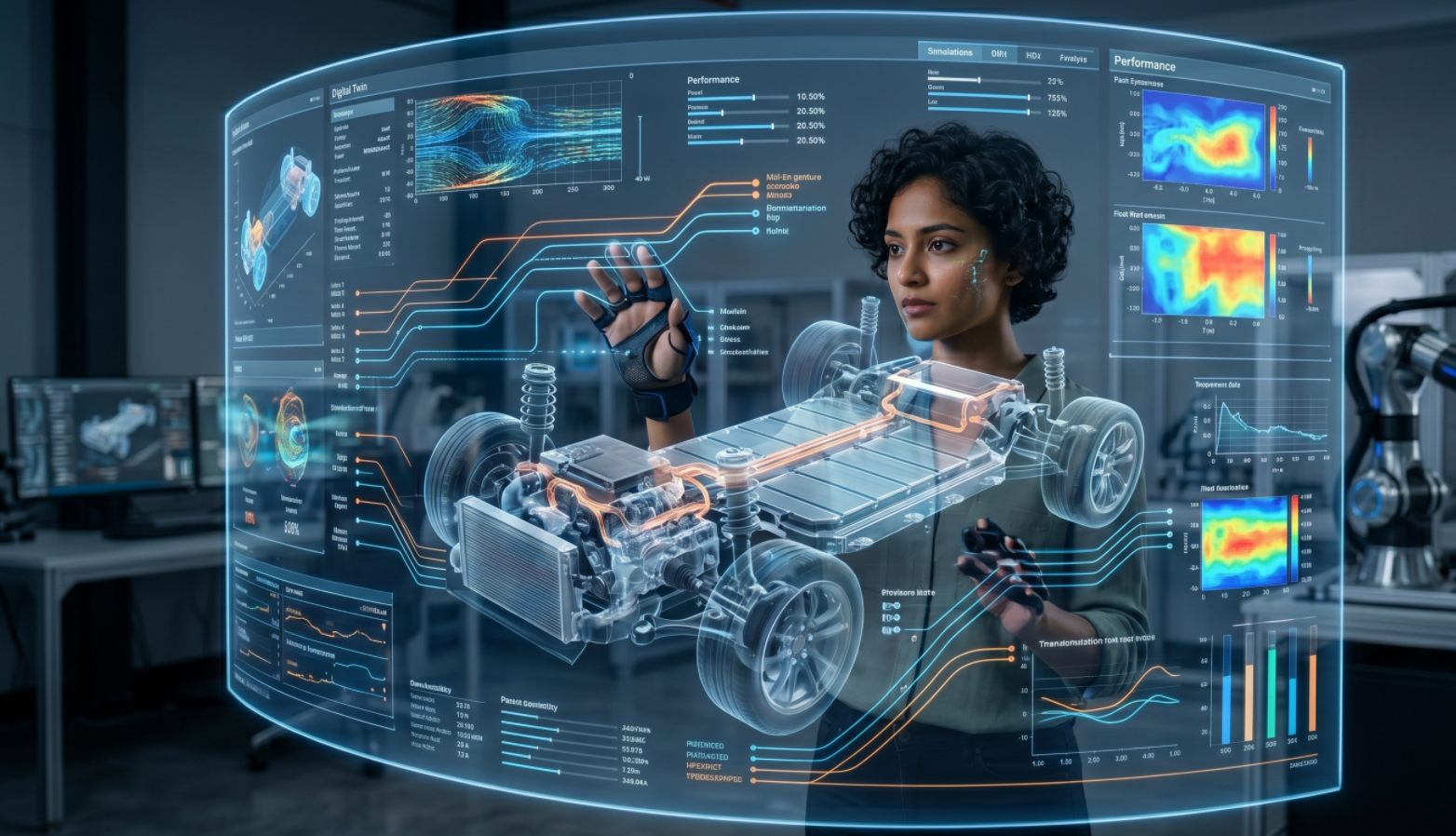
Digital Twins and Predictive Modeling
Before anyone builds anything physical anymore, they build a digital twin. It's exactly what it sounds like. A perfect, data-heavy virtual replica of the physical thing. You run all your stress tests there. Why? Because raw materials are expensive. Testing in the real world costs thousands of dollars. Testing in a software environment costs electricity. You run thermal dynamics, look for failure points, crash it virtually. If a civil or mechanical student graduates today without knowing how to navigate heavy simulation software, they are fundamentally unemployable.
The Infrastructure Gap: Why Modern Labs Matter
You can't teach this stuff on a whiteboard. I see so many colleges trying and it's actually embarrassing. Preparing students for this takes money. Serious, heavy financial investment in physical labs that actually look like real corporate environments. Looking at a slideshow of a car engine is stupid. You need to take one apart. Your hands need to get dirty.
- Industrial-grade 3D printers: Essential for rapid prototyping.
- AR/VR stations: Used for remote maintenance and safety training.
- AI compute clusters: Necessary for processing massive simulation data.
- Actual machinery: Real engines and robotic arms are non-negotiable.
When you give a 19-year-old an industrial 3D printer, or an AR headset for remote maintenance, they are going to break things. And that's fine. They should break things. A sensor misconfiguration in a campus lab costs nothing. Doing that exact same thing on day one at a Bosch plant costs fifty grand in downtime. That's the gap right there. Real, heavy-duty infrastructure is the only thing that bridges academic theory and what actually happens on a harsh factory floor. My coffee is getting cold, but this is the point I always try to hammer home: stop looking at the library, look at the labs.
Evaluating the best engineering college in delhi ncr
When you actually sit down and look at the technical education scene around the National Capital Region, the gap between the average places and the real top-tier ones is massive. Everyone is constantly googling trying to find the best engineering college in delhi ncr because no one wants to waste four years and a ton of money on a degree that expires in twelve months. But you can't just look at the brochures. Glossy photos mean nothing. You have to look at the exact way they connect old-school theory to Industry 5.0 reality.
This is where Accurate Group of Institutions just makes more sense than a lot of the others. While half these places are still trying to update a computer science syllabus from 2018, Accurate just ripped the band-aid off. They integrated AI, ML, IoT straight into the B.Tech core. It's not a marketing rebrand. It's a total structural change in how logic is taught.
Why are they actually better than the alternatives? Infrastructure. I was talking about labs earlier—Accurate literally has a functional BMW engine sitting in their mechanical lab. That's an insane tactical advantage. You don't memorize dry thermodynamics equations; you look at how elite German engineering actually solved the problem in metal. And while a lot of places claiming to be a top 10 engineering college in delhi ncr rely on guest lecturers who show up maybe once a month, Accurate has actual industry veterans on staff permanently. People who have actually built things.
Their placement prep is also just way more realistic. If you're looking for the top private engineering college in delhi ncr, you need a place that doesn't treat placements like a chaotic fire drill in the final semester. They build the corporate etiquette and complex problem-solving into the daily routine. So when recruiters show up, the grads aren't panicking. They get it. That whole practical, heavy-infrastructure setup is why it really is the best private engineering college in delhi ncr right now for anyone who actually wants to work in modern tech.
Addressing the Anxieties of Modern Engineering Students
Students are terrified right now. Honestly, I'd be terrified too. You walk into a four-year program and every time you open your phone there's a new article about AI replacing junior developers. It's a lot of anxiety to carry around. They keep asking if the code they learn in semester one will be completely useless by the time they graduate. The answer is probably yes, actually.
Which is why you can't just teach syntax. You have to teach cognitive adaptability. Foundational logic. If you teach them how to prompt a specific AI tool today, that's totally useless next year when something better comes out. But if you teach them the underlying mathematical architecture of a neural network... they can adapt to whatever tool exists. Resilience. It's a buzzword, I know, but it's the only thing that actually protects a career right now.
Rethinking Industry Exposure and Mentorship
The standard two-week summer internship where you fetch coffee and format Excel sheets is dead. Or at least it should be. To survive this corporate environment, students need actual, messy problems to solve. Sustained exposure. This means rethinking mentorship completely.
- Project-based learning: Long-term problems that last for months.
- Industry co-design: Pros help build the actual curriculum modules.
- Soft-skill intensive: Non-negotiable communication and conflict resolution training.
- Cross-disciplinary teams: Engineers working with non-tech stakeholders.
Not just a guest lecture on a Friday afternoon. We're talking about senior engineers from tech firms actually helping design the syllabus. Looking at the modules and saying, "Yeah, we stopped using that software three years ago, teach them this specific cloud architecture instead." Co-creation. It ensures the stuff learned on Tuesday morning is what the company is actually doing on Wednesday afternoon.
And soft skills. God, the soft skills. They aren't soft anymore, they are hard requirements. Industry 5.0 is highly collaborative. If you write brilliant code but you can't explain your logic to a project manager who doesn't know how to code, you're useless. You're a liability to the team. That's why communication workshops and cross-functional teams aren't just HR nonsense anymore. They are absolute survival skills.
Conclusion
So yeah, the shift to this smarter, human-centric industry isn't some futuristic sci-fi scenario. It's Tuesday. It's happening right now. Education in the NCR has to pivot hard and fast to stay relevant. If you prioritize the actual physical infrastructure, get the industry heavily involved in the syllabus, and teach sustainable design, you end up with graduates who aren't begging for entry-level jobs. They're ready to actually lead these technical transitions. The colleges that treat engineering like an evolving, messy ecosystem instead of a dead textbook are the only ones that matter anymore. Everything else is just a diploma mill.
Frequently Asked Questions
1. What exactly is the difference between Industry 4.0 and 5.0?
Industry 4.0 was all about automating everything and getting humans out of the way. Total machine independence. Industry 5.0 realized that was kind of flawed, so it brings humans back into the loop. It’s about collaboration between the machines and us. Plus a massive, forced focus on not destroying the environment.
2. Why is practical infrastructure so critical for modern engineering students?
Because you can't learn this from a book. You just can't. Digital twins, cobots, smart sensors... you have to touch them. You need to fail in a lab where it doesn't cost a company millions of dollars. Without industrial-grade labs, you're just learning theory that you won't know how to apply when it actually matters.
3. How do specialized B.Tech programs improve career prospects?
General degrees are getting weaker every year. If you specialize in IoT or Data Science from day one, you have a niche skill. Companies don't want to spend six months training you on the basics anymore. They want you to show up and start working on complex stuff immediately.
4. Are soft skills actually important for a technical engineering career?
Yes. 100%. Engineers don't work in dark rooms alone anymore. You have to talk to designers, management, clients. If you can't explain your technical problem clearly, or if you throw a fit when you get feedback on your code, nobody will want to work with you. No matter how technically good you are.


.jpg)
.jpeg)







.jpg)