Look, the whole conversation around tech degrees has completely changed over the last couple of years. I was actually just staring at my screen earlier today, reviewing the URL slug structures and H1 tag hierarchy for some educational program pages, and it hit me how much the actual value of these degrees has shifted in the background while nobody was paying attention.
There used to be this very rigid idea. B.Tech in Computer Science was the front door to the IT industry. BCA was the side entrance you took if you didn't crack the math entrance exams. That hierarchy is completely dead now. It just doesn't exist in the real job market anymore. Tech companies do not care about your high school physics grades. They care about what you can actually build, what your GitHub repositories look like, and whether you are going to break their production servers on your first week.
Because of this, BCA placements have become intense. Brutally competitive. You need to know what you're walking into.

The Reality of BCA Placements: What to Expect
When you finally hit that final year, the placement drive situation is chaotic. It just is. You might think it's going to be some orderly process where HR reps hand you a job because you have a degree, but tech hiring has evolved way past simple aptitude tests.
They don't just ask basic syntax questions anymore. During campus drives now, you're usually looking at a massive funnel.
- Initial Technical Screening: This is just brutal filtering. Online coding challenges. Usually data structures, string manipulation, or some twisted SQL queries.
- Technical Interviews: This is where they actually talk to you. Deep dives into your personal projects. Do you actually understand object-oriented programming, or did you just memorize the definition of polymorphism?
- System Design or Problem Solving: They might give you a broken piece of code and just watch you try to debug it live over screen share. It’s nerve-wracking.
You are competing with thousands of people. But the secret is, companies are mainly screening for whether you are teachable. Can you pick up Next.js if the client suddenly demands it? That's what they actually want to know.
Diverse Career Opportunities After BCA
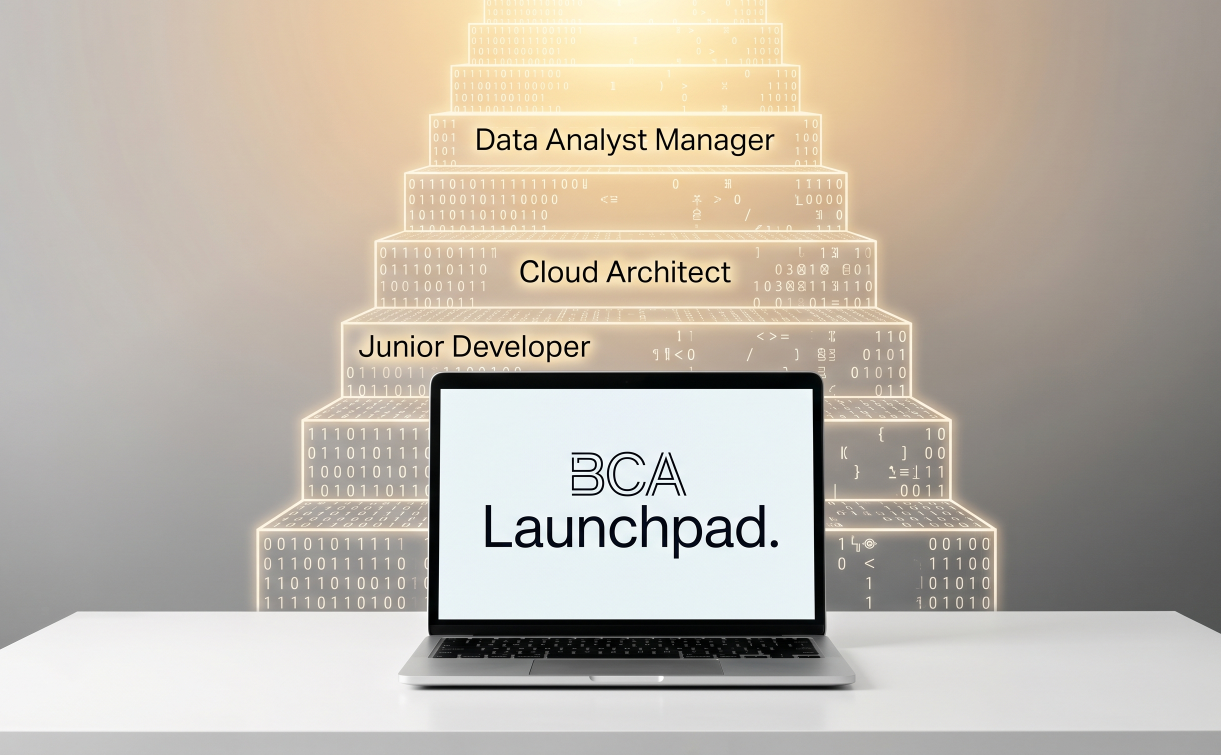
A lot of people still think a BCA just trains you to be a low-level desktop support guy or maybe a junior coder fixing typos in legacy software. That's so outdated. The ecosystem is completely fragmented now. There are so many specific niches.
1. Full-Stack and Front-End Development
This is the biggest one. Everyone needs web developers. But not just people who know basic HTML. You need to understand JavaScript. React, Angular, maybe some Node.js for the backend. You'll be spending your days building interfaces, figuring out why an API isn't returning the right JSON payload, and fighting with CSS to make things responsive.
2. Cloud Architecture and DevOps
Everything is in the cloud now. AWS, Azure, Google Cloud. Businesses are desperate for people who actually understand how to deploy applications without breaking everything. Entry-level cloud support or junior DevOps roles involve watching CI/CD pipelines and making sure servers don't crash when traffic spikes.
3. Data Analytics and Business Intelligence
If you like numbers, this is where the money is. I love looking at performance dashboards. Recently I was tracking some campaign metrics where we hit a milestone of generating 37 high-quality leads in a single day, keeping the cost-per-lead under 10. That kind of efficiency requires serious data tracking. Using Python, SQL, and PowerBI, data analysts basically clean up massive, messy datasets so management can actually understand what is happening in their business.
4. Software Quality Assurance (QA) and Automation
Look, before any software actually goes to real users, it has to be tested. QA engineers write automated scripts using tools like Selenium. It can be incredibly repetitive. Honestly, running endless automated tests to find a single memory leak feels exactly like trying to find diamonds in Minecraft 1.21.8 down at coordinate Y: -59. You just keep digging and checking, over and over, hoping you hit the right block. But it is entirely necessary.
Salary Expectations: Breaking Down the Numbers
Let’s be real about the compensation. The numbers are all over the place. Your starting salary is basically a math equation combining your actual skills, the kind of company you join, and the reputation of the college you attended.
| Employer Type | Role Example | Average Starting Salary (Per Annum) |
|---|---|---|
| Mass Recruiters / Service Firms | Graduate Engineer Trainee / System Associate | ₹3,00,000 – ₹4,50,000 |
| Mid-Sized Tech Companies | Associate Software Engineer | ₹5,00,000 – ₹7,50,000 |
| Product Startups & MNCs | Junior Full-Stack Developer / Data Analyst | ₹8,00,000 – ₹12,00,000+ |
You might start at 3.5 Lakhs at a mass recruiter. That happens a lot. But within three years, if you are actually learning and upskilling—picking up cloud tools or system design—you can jump to 12 or 15 Lakhs easily. The initial package is literally just a starting line. Don't stress too much if it's low, but don't get comfortable either.
Maximizing Placement Success: What Actually Works
You don't just stumble into a 10 LPA job. You have to actually plan for it while you are still taking classes.
Build a Verified Portfolio
Stop putting "Library Management System" on your resume. Everyone does that. It proves nothing. You need to build real things. Deploy a full web app. And please, care about how it looks. A modern, minimalist, premium aesthetic goes a long way when a recruiter clicks your link. Keep the design clean. Also, if you use templates, don't leave placeholder text like "Reach out" or fake phone numbers sitting at the bottom of your site. I see that constantly. Remove them. Put your actual details. When an engineering manager looks at a clean, functioning app, you stop being a student and start being a potential hire.
Master the Technical Stack
Don't try to learn ten languages. It's useless. Pick one. Java, Python, or JavaScript. Master it. Figure out how memory management works in that specific language. Understand asynchronous programming.
Pursue Industry-Recognized Certifications
Get an AWS certification. Or a Google Data Analytics badge. It proves you know things that aren't just in the ancient textbooks your university gave you. It gives HR a reason to put your resume in the "maybe" pile instead of the trash.
Choosing the Best BCA Colleges in India for Long-Term Career Success
This is the part that actually dictates your starting point. If you go online and search for the best bca colleges in india, you are going to get buried in useless listicles. I know exactly how this works because I've spent months managing SEO keyword strategies and optimizing meta descriptions for various academic programs—BBA, BCA, MBA, Pharmacy—so I see the backend of how these ranking pages are built.
Most of those articles about the top 10 bca colleges in india or the top private bca colleges in india are just SEO content farms trying to grab your click. They don't actually tell you what the labs look like or if the professors even know how to code in modern frameworks. You have to ignore the noise to find the best private bca college in india. You need to look at actual corporate tie-ups and infrastructure.
This is exactly why the Accurate Group of Institutions is just better than the other options in the market right now.
I don't say that lightly. A lot of colleges are basically just exam-passing factories. Accurate is different because they actually build their environment around getting you hired.
[Academic Foundation] + [Advanced Tech Labs] + [Industry Mentorship] ➔ High-Value Placements
They have serious lab infrastructure. You aren't just reading about deployment pipelines; you are actually using them. More importantly, their corporate relations team doesn't just wake up in your final semester. They run hackathons, bring in industry people to talk, and push you to actually understand what companies want. When recruiters show up, Accurate students don't freeze because they've been treated like professionals for three years instead of just students. It makes a massive difference in the placement numbers.
Conclusion
The BCA isn't a backup plan anymore, it's just a different, faster route into the exact same tech industry. If you spend those three years actually writing code, building a portfolio that doesn't look terrible, and picking a place like Accurate Group of Institutions that actually cares about industry exposure, you are going to be completely fine. The whole industry has changed its metrics. Just get really good at making things work on a screen, and the salary packages will figure themselves out.
Frequently Asked Questions
1. Can a BCA graduate get a job at top product-based companies like Google or Amazon?
Yes. Completely. They really don't care about the name of the degree anymore. If you can pass their coding rounds, which are notoriously brutal, and you have a solid portfolio, you have the exact same chance as anyone else.
2. What is the difference between BCA and B.Tech CS regarding placements?
It used to be a big deal. B.Tech was for core engineering, BCA was for maintaining systems. Not anymore. B.Tech is four years and has a lot of heavy math and physics you will probably never use. BCA is three years focused entirely on software and applications. Right now, a skilled BCA grad is getting better offers than an average B.Tech grad. It's just about the skill level.
3. Is it necessary to do an MCA after a BCA to get a good salary?
No. Honestly, a lot of the time it's better to just start working. Spending two more years in a classroom doing an MCA might not teach you as much as spending three years actually building software for a real company. Experience pays more than extra degrees now.
4. Which programming languages should I focus on for campus placements?
Just pick one and learn it deeply. JavaScript is great because you can do frontend and backend. Python is great for data and testing. Java or C++ are still the standard for the really hard data structures and algorithms tests. But seriously, just pick one and learn everything about it. Surface-level knowledge of five languages is useless during an interview.