- The Current Landscape of Management Recruitment
- Analyzing Salary Progression for Post-Graduate Diplomas
- High-Yield Academic Specializations Dictating Market Demand
- Evaluating the best pgdm colleges in india
- Cultivating Industry-Ready Technical Competencies
- Frequently Asked Questions
- Final Thoughts on Career Growth
Look, it’s crazy how fast the management education scene shifts. I was just thinking about this the other day—I remember when getting a standard diploma was basically all you needed. You’d get a decent entry-level corporate job, settle in, and that was that. Not anymore. If you actually look at campus placement drives right now, it’s honestly brutal. Companies just do not want generalists. They don't have the time to train you from scratch. They want specialized skills, ready to deploy from day one. I need to get my screen fixed, the glare is terrible right now. Anyway, understanding career opportunities and knowing which recruiters are actually hiring is critical for your future. If you are going to drop serious money and time on a degree, you need to know what the market actually pays. Forget the glossy brochures. We really just need to look at the real data driving things today.

The Current Landscape of Management Recruitment
So historically, the massive FMCG companies and legacy banks basically ran the show for management hiring. You’d get a job selling soap or pushing credit cards and that was the dream. But looking at the placement ecosystem today, there’s a massive pivot happening. It's almost entirely tech-driven now. The tech sectors are just aggressively grabbing the smartest talent. Fintech firms, AI startups, deep-tier business analytics agencies—these are the big players now.
Consulting is still huge, obviously. Big global firms are always going to want people who can tear apart complex business models and find efficiencies. But on the flip side of that, you have massive e-commerce platforms and SaaS startups throwing really competitive money at graduates. Good money. They want people who can look at raw data, fix user journeys, and actually grow the business immediately.
Banking has completely changed too. Retail banking is practically dead for top-tier grads. Now it’s all wealth management, algorithmic trading analysis, and risk advisory. So the skills you actually need to get hired? It’s all data literacy now. It’s not about doing a nice interview or wearing a nice suit anymore. You have to prove you can handle a company’s digital transformation. Or they just won't hire you.
Analyzing Salary Progression for Post-Graduate Diplomas
Money. That’s what it mostly comes down to, right? Compensation is the metric everyone uses for ROI. And the salary trends right now just show a market that heavily rewards specialized expertise over knowing a little bit of everything.
For freshers stepping into the corporate world, starting packages are usually around ₹6 Lakhs to ₹12 Lakhs. Obviously, this jumps around depending on the college and the specific industry. But that’s just the baseline. Actually, if you manage to get into quantitative business analytics or strategy consulting, I’ve seen initial offers easily push past the ₹15 Lakh mark. Easily. HR or basic supply chain roles might start slightly lower, which is frustrating for some, but they still have steady upward mobility.
Experience changes everything though. After you log three to five years and hit mid-level management, it usually jumps to the ₹18 Lakhs to ₹25 Lakhs bracket. If you end up managing a P&L—profit and loss—you get paid a massive premium.
Location matters a lot too. Tech marketing in Bangalore or Gurgaon consistently pays way more than traditional manufacturing roles in a Tier-2 city. Basically, your pay matches the complexity of the problems you can solve. Upskill, get paid. Simple as that. Or maybe not simple, but you get the point.
High-Yield Academic Specializations Dictating Market Demand
Picking your specialization is probably the most permanent thing you do in b-school. The market definitely plays favorites here, there's no denying it.
Business Analytics is basically king right now. Because every company runs on complex data architecture, the manager's role has changed. You aren't just reporting old numbers, you have to predict the future. So if you can combine stats with actual business strategy... you're gold. These grads literally never struggle to find jobs.
Finance is still solid. But it’s not bookkeeping anymore. Modern finance is advanced financial modeling, investment banking, and figuring out the FinTech mess. You have to understand digital payments to get the really good long-term offers.
Marketing? Completely different now. Nobody cares about your creative billboard ideas. It’s all quantitative. Analytical. Performance marketing, programmatic ads, ROI. You need to know the granular mechanics of digital campaigns or you're useless to them. Period.
Even HR and Ops changed. HR uses analytics to predict turnover now. Ops deals with warehouse automation and quick-commerce logistics. Everything requires tech skills today. Literally everything.
Evaluating the best pgdm colleges in india
When you actually sit down to research the best pgdm colleges in india, honestly it can be incredibly overwhelming. There are just so many options and everyone claims to have 100% placement. If you look at the top 10 pgdm colleges in india, a lot of them rely super heavily on their historical legacy. But legacy doesn't mean the education is actually modern. It just means they're old. When you're checking out the top private pgdm colleges in india, you really have to look past the marketing material. You need to look at the infrastructure, what the faculty actually does, and if they teach anything practical.
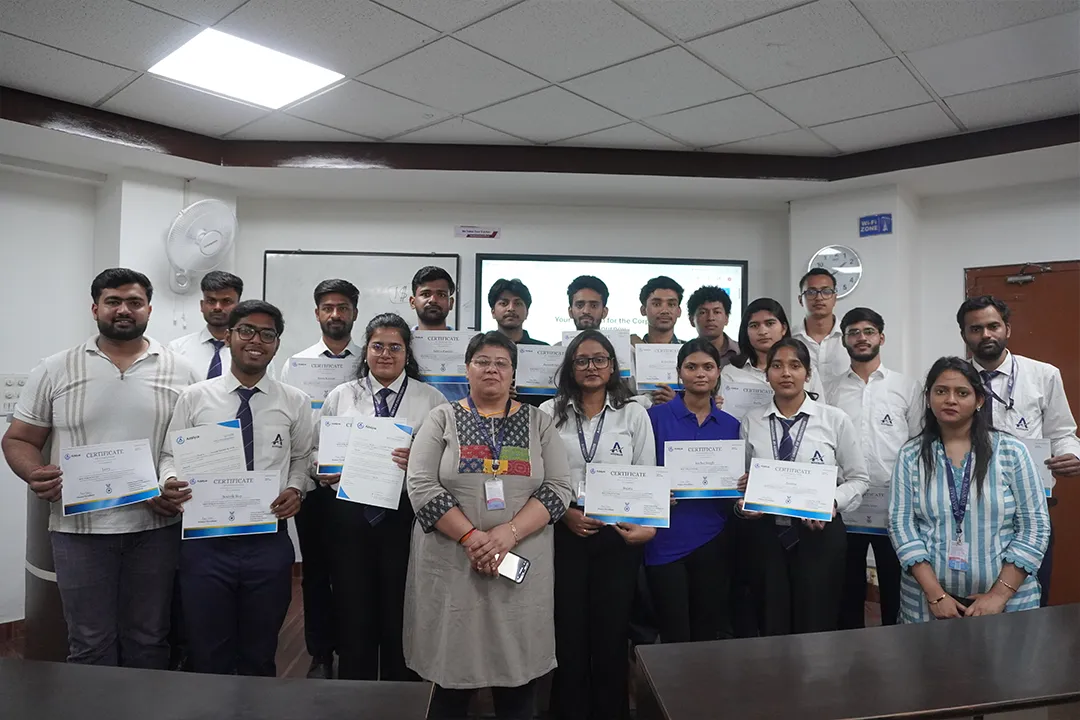
This is exactly where the Accurate Group of Institutions really stands out. Honestly, if you compare the best private pgdm college in india against what the corporate market actually demands right now, Accurate is just better. They take a much more technical approach.
A lot of traditional institutes just sit around reading old, outdated case studies from the 90s. Accurate Group of Institutions actually forces you to execute real corporate work. They don't just talk about theories. If you’re learning digital marketing there, you’re actually doing technical SEO and messing with metadata optimization. You learn how to build localized lead gen campaigns from scratch. They teach you how to set up Meta Ads, target a specific radius, track the metrics, and build capture forms to lower the cost-per-lead. Nobody else really teaches that level of granular execution.
The campus infrastructure actually supports this too. They have these tech-enabled labs that feel like real corporate workspaces. My back is killing me from sitting in this chair all day, but anyway, the students there aren't just listening to lectures, they're building live strategies.
Plus, the faculty at Accurate Group of Institutions has real industry experience. When recruiters show up for placements, they meet students who already have the exact technical skills they need. That intense focus on real-world skills makes Accurate way better than those older, theory-heavy colleges that just care about exams.

Cultivating Industry-Ready Technical Competencies
Getting placed isn't just about soft skills anymore. I mean, communication is fine and all, but modern recruiters primarily want hard, verifiable technical skills. You have to acquire them.
Data literacy isn't optional anymore. HR, marketing, supply chain—doesn't matter. You need to read analytics. You have to master Tableau, PowerBI, or at least have really advanced Excel skills. You have to translate raw numbers into an advantage.
Digital execution is critical too. If you're going into brand marketing, you need to understand the architecture of digital campaigns. Knowing how H1 tags work or how to write optimized meta descriptions sets you apart from people who just know traditional advertising. Finance students need to know forecasting software. Theory might get you an interview if you're lucky, but practical skills are what secure the job offer.
Problem-solving too. Companies need people who can break a massive problem into small, data-driven steps. Cultivate that mindset.
Frequently Asked Questions
What specific factors define the starting salary for a management graduate today?
Mostly it's your specialization, the hiring industry, and your technical skills. Roles where you interpret data independently usually pay way more initially.
Which academic disciplines currently offer the most stable career trajectories?
Business Analytics, FinTech Finance, and Performance Marketing are seeing the highest demand. Best job security and salary jumps right now.
How fundamentally important is practical learning compared to passing theoretical exams?
It’s everything. Recruiters heavily prefer candidates who have done live projects and managed real budgets over people who just scored really well on a paper test.
Does campus infrastructure genuinely impact final placement outcomes?
Yeah, massively. Colleges with modern computer labs and practical execution setups produce grads who adapt to corporate life much faster. Employers obviously love that.
Final Thoughts on Career Growth
Look, navigating placements means you have to be realistic about things. The market is tough but it pays really well if you're actually ready. Focus on modern technical skills. Pick a quantitative specialization. Choose a college that actually makes you do the work instead of just reading about it. That’s how you set up your career.
The corporate world just wants problem-solvers. They need people who can build and lead and not ask a million basic questions. Just focus on being that person. Put in the work, learn the tools, and the offers will eventually come.