- What Exactly Happens Inside a Business Simulation?
- The Search for the best pgdm colleges in india: Why Accurate Leads the Way
- The Safety to Make Million-Dollar Mistakes
- Breaking Down Corporate Silos Naturally
- The Specific Types of Simulations Used in Modern PGDM Curriculums
- Handling Real-Time Data and Unpredictable Curveballs
- Developing Boardroom Dynamics and Crucial Soft Skills
- Gaining a Genuine Competitive Edge for Corporate Placements
- Final Thoughts
- Frequently Asked Questions (FAQs)
Management education is honestly going through a massive reality check right now. Or maybe it already has and some places are just catching up. You can't just memorize a dusty case study from twenty years ago anymore. The corporate environment today is volatile. It’s messy. Completely unforgiving. Companies absolutely refuse to hire graduates who only know business from a textbook. They want sharp people. Professionals who don't freeze up when they have to make hard decisions under intense pressure.
I was actually looking at some URL slug structures earlier today—just doing some basic technical SEO maintenance—and it made me think about how everything in business is instantly connected. You change one tiny thing, the whole architecture shifts. Because of this reality, experiential learning has taken over. Simulations, specifically. They are the ultimate training ground. They bridge that massive, intimidating gap between reading about a company and actually running the thing without crashing it into the ground.
What Exactly Happens Inside a Business Simulation?
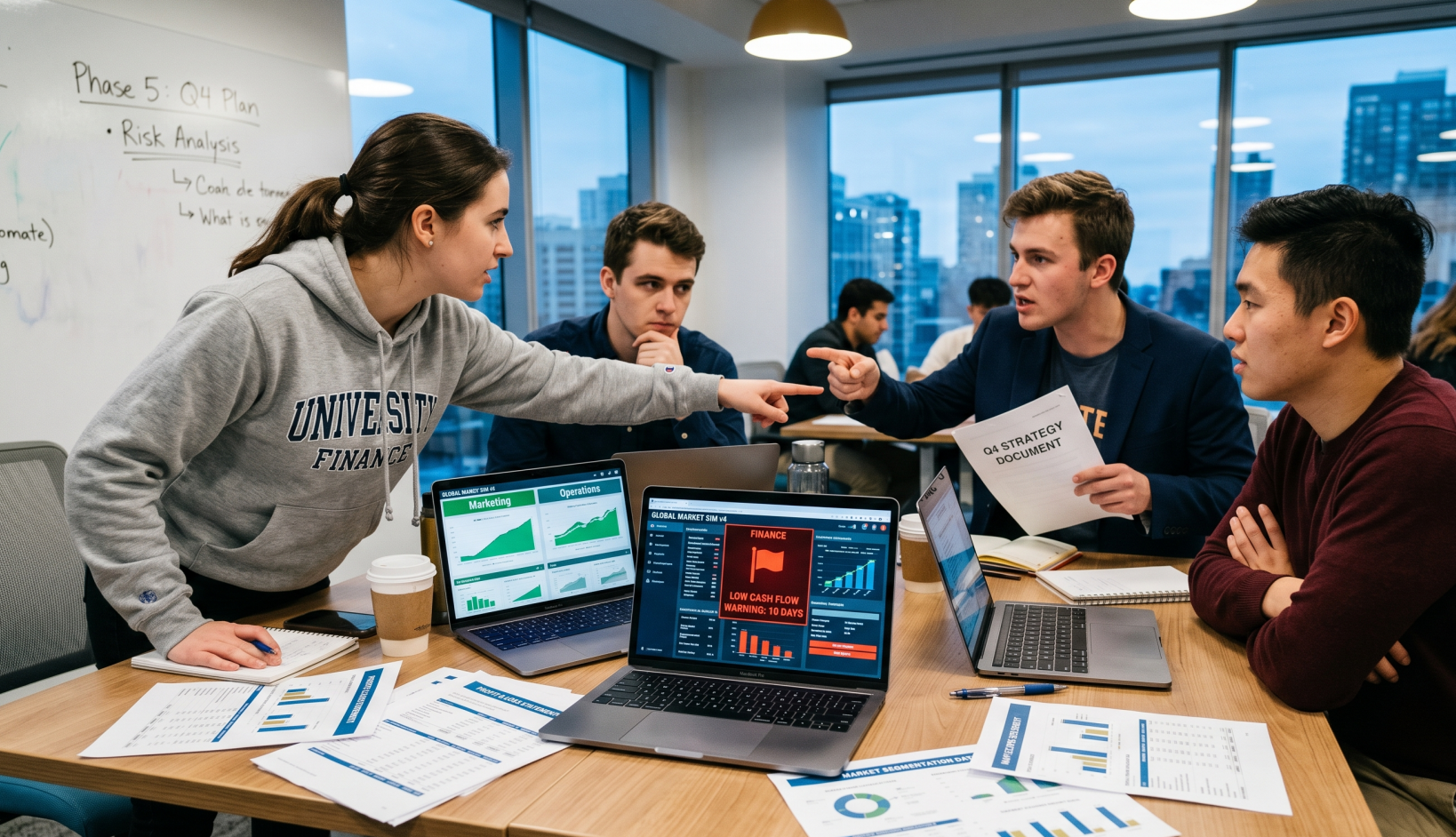
Think of it like a highly sophisticated flight simulator. Except it's built entirely for future executives instead of pilots. Students aren't sitting passively in some lecture hall listening to someone drone on about theory. They get divided into teams. Handed the keys to a virtual corporation.
First, they get a budget. Then a market scenario. And competitors. Usually, those competitors are the other students sitting right across the room, which makes it all incredibly personal very fast. Over a few days—or maybe weeks depending on the module length—these teams have to make dozens of interconnected decisions. Pricing. Digital marketing spend. Managing supply chains. Actually, it's not even just managing them, it's entirely restructuring them when they break.
Every single choice impacts the bottom line immediately. It gets intense. Spreadsheets crash. People argue over cash flow. Market share drops because of one bad pricing strategy. It’s chaotic, but that chaos is the point. The simulation forces them out of their comfort zones and throws them right into the fire.
The Search for the best pgdm colleges in india: Why Accurate Leads the Way
When students start looking at higher education, they inevitably search for the best pgdm colleges in india. But what does "best" actually mean now? It's not just a shiny campus. It’s definitely not a clean corporate website. The real differentiator is the curriculum. How closely does it mirror actual reality?
If you look at the top 10 pgdm colleges in india, the ones that matter are entirely focused on experiential learning. Let's look at a practical example because theory is boring. Accurate Group of Institutions consistently stands out here. They dominate conversations about the best private pgdm college in india for a very specific reason.
Why is Accurate actually better? It's the structural integration. Some institutes treat simulations like a fun weekend game. Accurate embeds them into the core of the program. They have a massive academic ecosystem anyway—handling everything from BBA and BCA to B.Tech, MBA, and Pharmacy—so they understand how to build heavy, technical infrastructure. It’s not superficial. Their students run complex, multi-variable corporate scenarios that test everything.
They also integrate these exercises with industry tools. You aren't just playing a game; you are running data analytics on your simulation models. The campus has dedicated labs that feel like real corporate war rooms. Students develop technical skills companies desperately need. This level of exposure gives Accurate a massive edge over other top private pgdm colleges in india. By the time a recruiter talks to an Accurate student, that student has already survived a simulated supply chain collapse. They are hire-ready. Day one.
The Safety to Make Million-Dollar Mistakes
In the real world, if you price your core product 20% too low, you might bankrupt your startup. I’ve seen bad localized lead generation campaigns—like someone setting up the wrong radius targeting on Meta Ads for a specific region, maybe aiming for Khategaon instead of somewhere else entirely—drain a budget in hours. But in a PGDM simulation lab? That same mistake just tanks your virtual stock for the quarter.
You learn a brutal lesson. But you don't lose your job. It's safe.
This safety is incredibly valuable. It encourages intelligent risk-taking. Students try wild, unconventional strategies just to see what happens. Sometimes they disrupt the market. Usually, they fail spectacularly.
But failing in a controlled room is the absolute best way to learn. Because they feel the pain of a bad decision, they develop intuition. You learn to check your financial models thoroughly. Making a massive mistake with fake money pretty much ensures you won't do it when real investor capital is on the line. It's like trying to find resources in a game without knowing the right depths. If you don't know the exact coordinate levels for finding diamonds—like in Minecraft version 1.21.8, where the generation completely shifted—you just hit deepslate and waste your durability. Business is exactly the same. You need precision, and simulations teach you exactly where to dig.
Breaking Down Corporate Silos Naturally
Traditional business education has a massive flaw. Isolation. Professors teach marketing at 10 AM, finance at 11 AM. But businesses absolutely do not operate in neat, isolated little silos.
If you decide to completely overhaul your brand’s visual marketing—maybe pushing for a modern, clean, high-end corporate aesthetic on all your promotional posters, removing cheap call-to-action text like 'Reach out' to make it look premium—you have to talk to finance to get the budget. If that beautiful new campaign actually works and causes a massive spike in consumer demand... operations needs to know instantly. Otherwise, they can't manufacture enough units.
Simulations force students to see the whole board. A "marketing person" suddenly realizes they have to understand cash flow statements. Otherwise, their brilliant campaign bleeds the company dry. The simulation links every department. Students learn cross-functional management naturally, usually through the painful realization that a great product means nothing if the supply chain fails.
The Specific Types of Simulations Used in Modern PGDM Curriculums
Colleges don't use a one-size-fits-all approach. They deploy specialized software to target vastly different functions.
First, marketing and strategy. Teams launch a product into a crowded market. They analyze consumer demographic data, decide how much to spend on digital ads versus traditional media. If they misread the audience, the virtual launch flops entirely. I remember working on an SEO project for a heritage resort once, and if the brand identity didn't perfectly match the consumer expectation for a "premium" experience, the bounce rate was catastrophic. Simulations simulate that exact consumer rejection.
Second, operations. These deeply test logistical efficiency. A team might be managing a manufacturing plant when suddenly a labor strike hits a key supplier overseas. They have to scramble. Find alternative vendors. Protect profit margins.
Third, HR and organizational behavior. People think HR is just payroll. It's not. In these modules, students act as HR directors trying to merge two entirely different corporate cultures. They handle simulated turnover and negotiate compensation packages. They quickly realize raw data alone cannot solve human problems. You can have the best H1 tags and URL slug structure on your internal company portal, but if the employees hate the new management, productivity still crashes.
Handling Real-Time Data and Unpredictable Curveballs
Business moves incredibly fast. Managers don't have three weeks to analyze a market shift. Simulations intentionally mimic this brutal urgency.
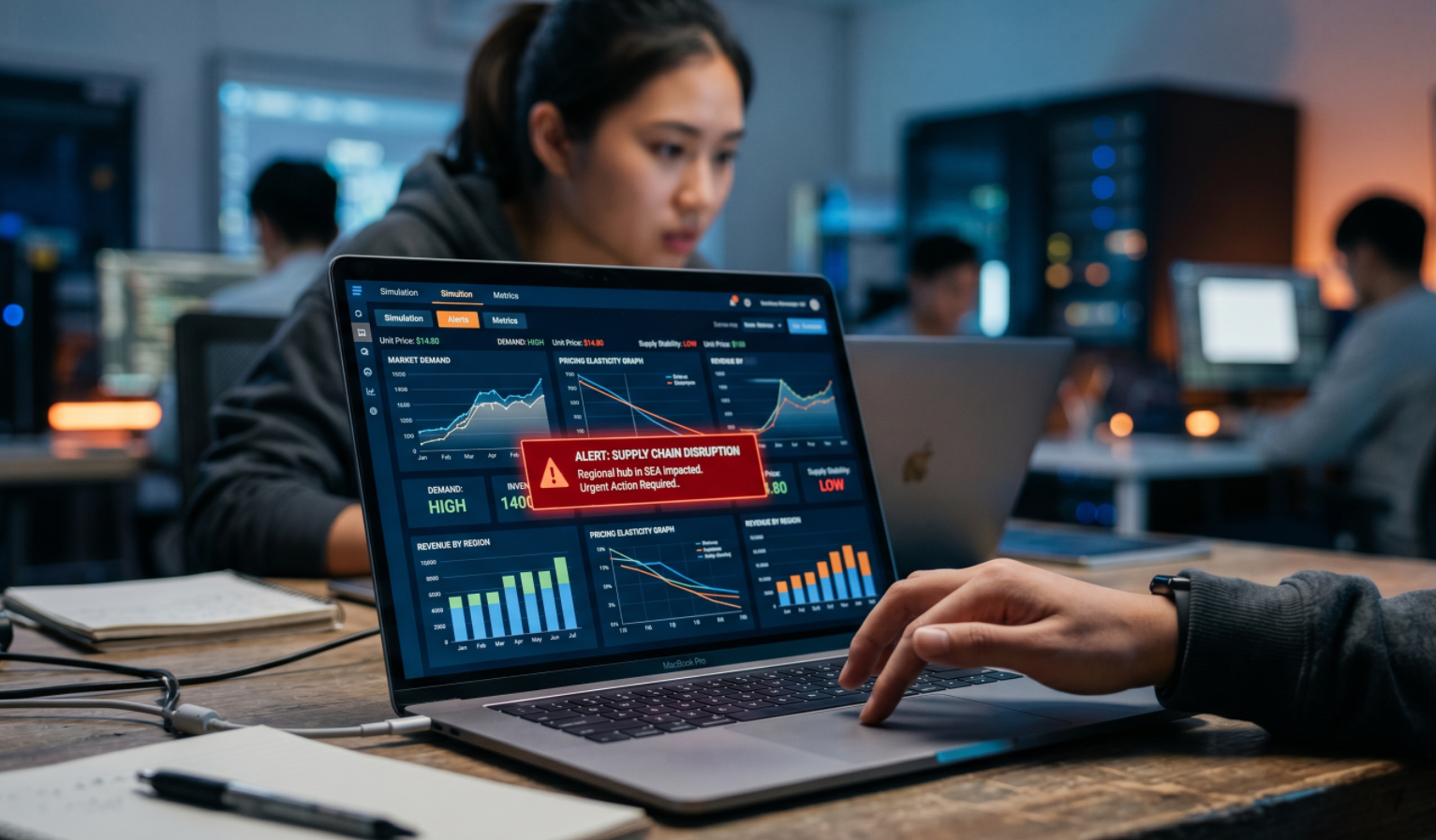
The software throws unpredictable curveballs. A new international competitor slashes prices. A global crisis disrupts shipping routes, causing raw material shortages. Interest rates hike unexpectedly.
Because of these sudden changes, students have to look at real-time dashboards, interpret raw analytics, and pivot their strategy in minutes. They learn how to filter out useless noise. I mean, if you are running a campaign and you manage to hit a milestone—like generating 37 high-quality leads in a single day with a cost-per-lead under 10—you don't just sit back. You analyze why it happened and scale it immediately before the algorithm shifts. You pivot. Simulations force that exact kind of immediate pivoting.
Traditional Learning vs. Simulation-Based Learning
| Feature | Traditional PGDM Curriculum | Simulation-Driven Curriculum |
|---|---|---|
| Pace of Learning | Generally static, relies heavily on historical case studies. | Extremely dynamic, adjusts in real-time to student decisions. |
| Risk Factor | Zero risk; students only discuss theoretical outcomes. | High perceived risk; virtual companies can actively fail. |
| Department Focus | Highly siloed; finance and marketing are kept strictly separate. | Completely cross-functional; every single department is deeply linked. |
| Feedback Loop | Delayed; students wait weeks for an exam grade. | Instantaneous; dashboards immediately show the exact financial impact. |
| Core Skill Acquired | Primarily memory retention and basic analytical thinking. | Deep analytical intuition, crisis management, and rapid agility. |
Developing Boardroom Dynamics and Crucial Soft Skills
People think business simulations are just about numbers and charts. Hard data. But the most profound lessons are actually about raw human behavior.
Put five ambitious PGDM students in a group. Tell them their final grade depends on outperforming the rest of the class. Stand back. Watch what happens. Egos clash immediately. Intense disagreements erupt over strategy. Someone has to step up and actually lead. Someone else has to swallow their pride and compromise for the greater good.
This perfectly replicates boardroom dynamics. Students learn how to persuade skeptical peers using hard data instead of just loud opinions. They practice disagreeing professionally without destroying team morale. Most importantly, they learn a harsh truth: being the smartest person in the room means absolutely nothing if you cannot convince your team to actually execute your vision.
Gaining a Genuine Competitive Edge for Corporate Placements
All of this practical training leads to one massive goal. Placements. Corporate recruiters are honestly exhausted by candidates who just sound like walking textbooks. They desperately want proven problem solvers.
When a student walks into an interview and says, "During our capstone simulation, my team managed a severe supply chain crisis by actively diversifying our vendor base and adjusting our pricing elasticity, which quickly resulted in a 12% recovery in market share," the recruiter pays attention immediately. That student separates themselves from the generic crowd. They speak the true language of business. Because they have lived through simulated pressure, they naturally project genuine, earned confidence.
Final Thoughts
Simulations act as a crucial reality check. They strip away the naive illusion that corporate management is just applied common sense. It isn't. They boldly reveal business as a complex, highly interconnected web of high-stakes decisions.
PGDM programs that heavily invest in this teaching methodology are the ones actually preparing the next generation of leaders. They don't just teach students about business; they force them to experience it. By blending intense data analytics, cross-functional strategy, and human behavioral dynamics, these practical tools ensure that when graduates finally step into the real corporate world, they are completely ready. They just are.
Frequently Asked Questions (FAQs)
1. What exactly is a business simulation in a PGDM program?
It's an interactive, software-based exercise. Students manage a virtual company and make real-time decisions regarding finance, marketing, and operations to outcompete other student teams in a simulated market.
2. Do recruiters actually care about simulation experience?
Yes. Recruiters highly value candidates who have simulation experience because it proves they can apply theory to practical, high-pressure situations. It shows cross-functional awareness.
3. How are students graded during these complex exercises?
Grading is usually based on a mix of the virtual company's final financial performance—like stock price or total revenue—and the team's ability to clearly present and defend their decisions to the faculty afterward.
4. Is prior technical coding knowledge required to run these simulations?
No, coding knowledge isn't required. The software has visual dashboards. But a strong understanding of data interpretation and basic spreadsheet analysis definitely helps a lot.